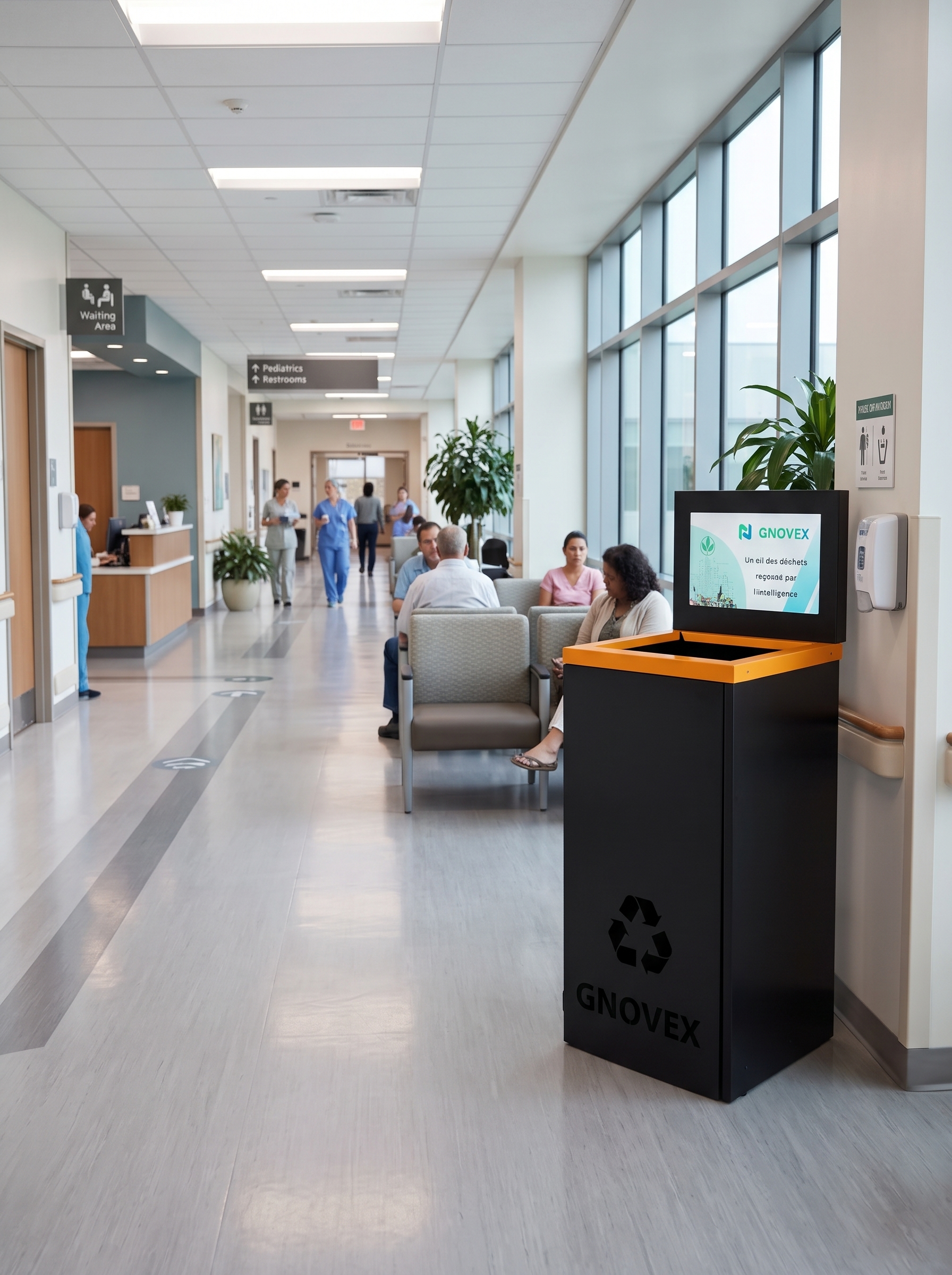
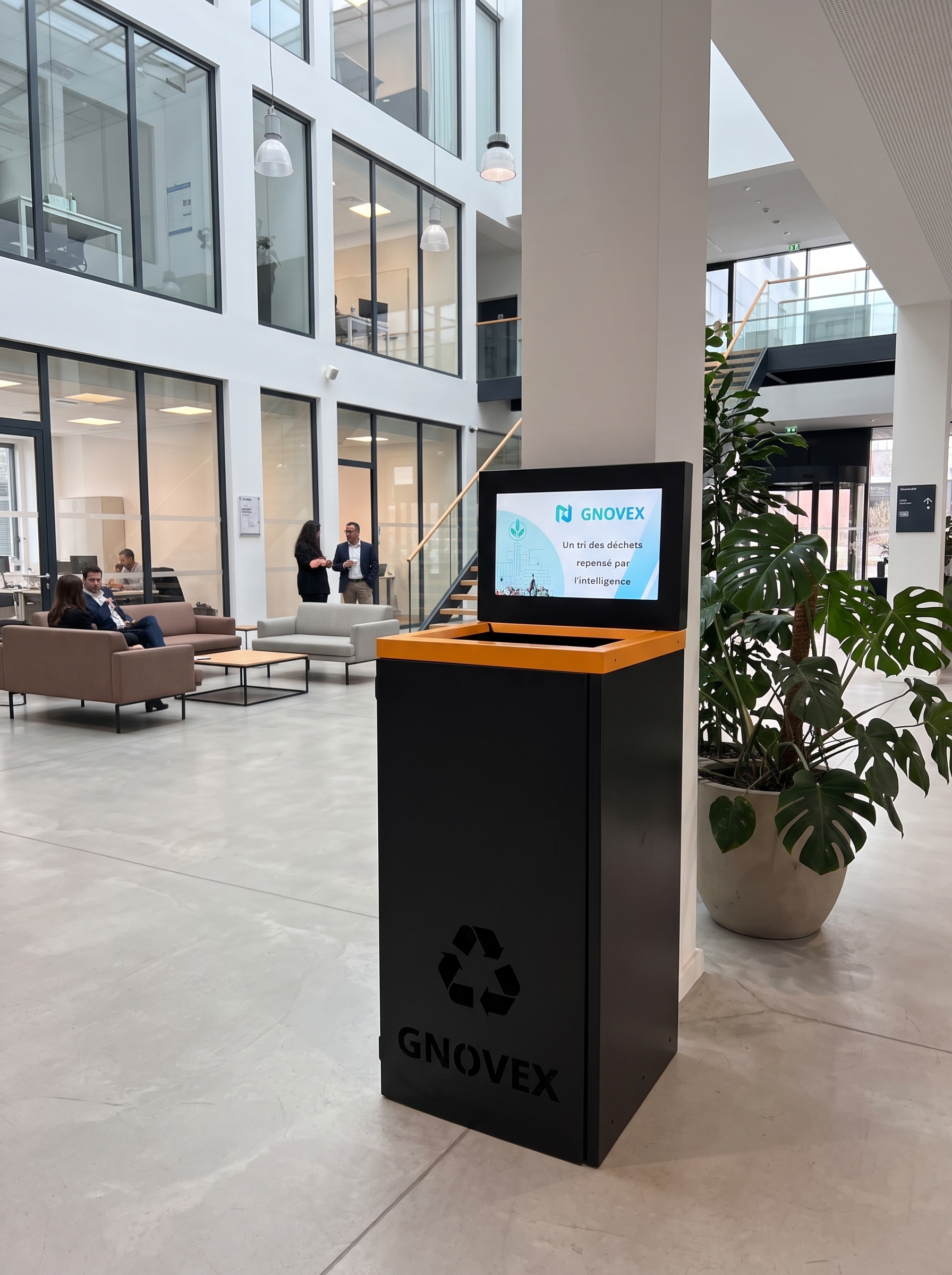
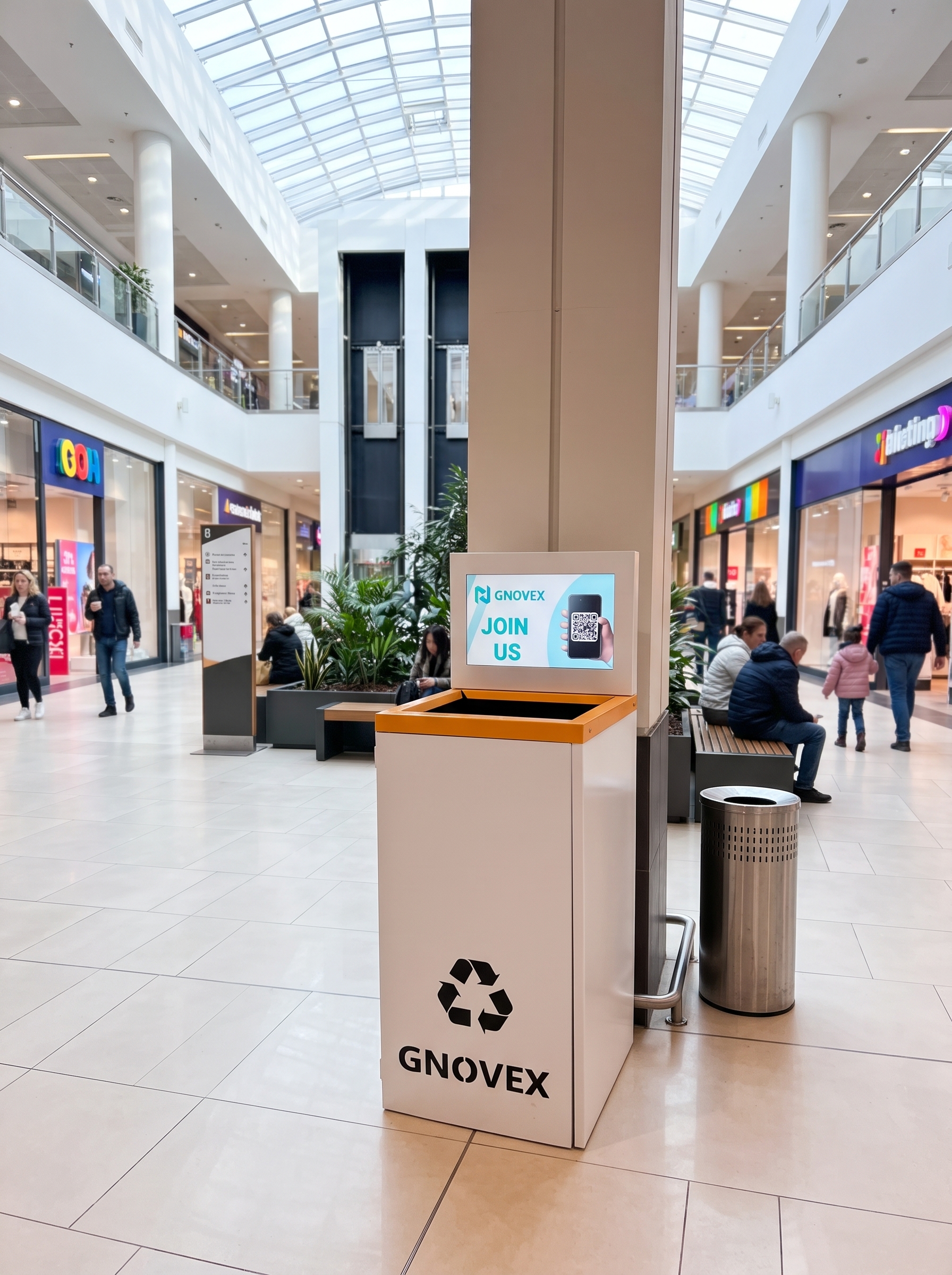
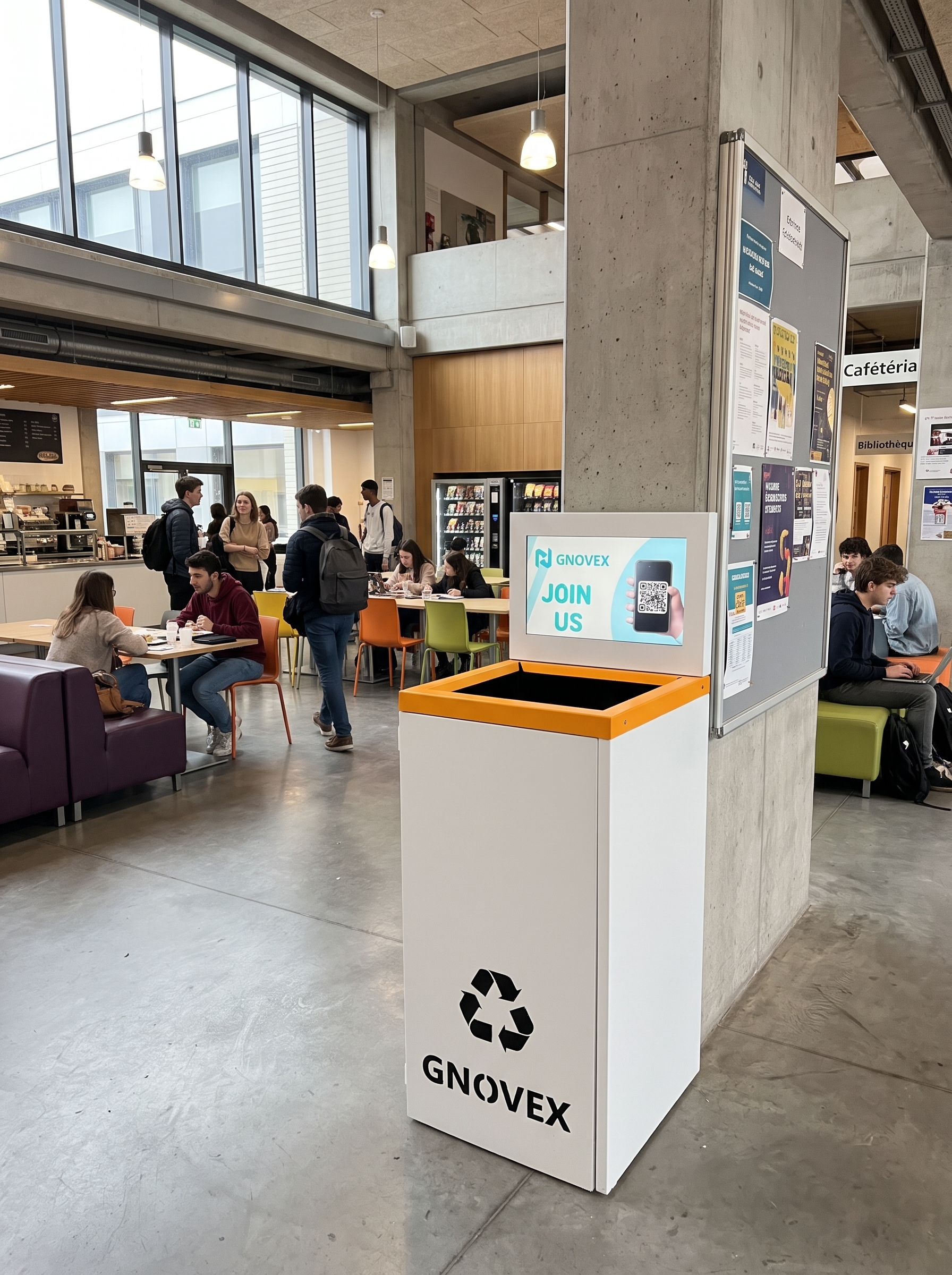
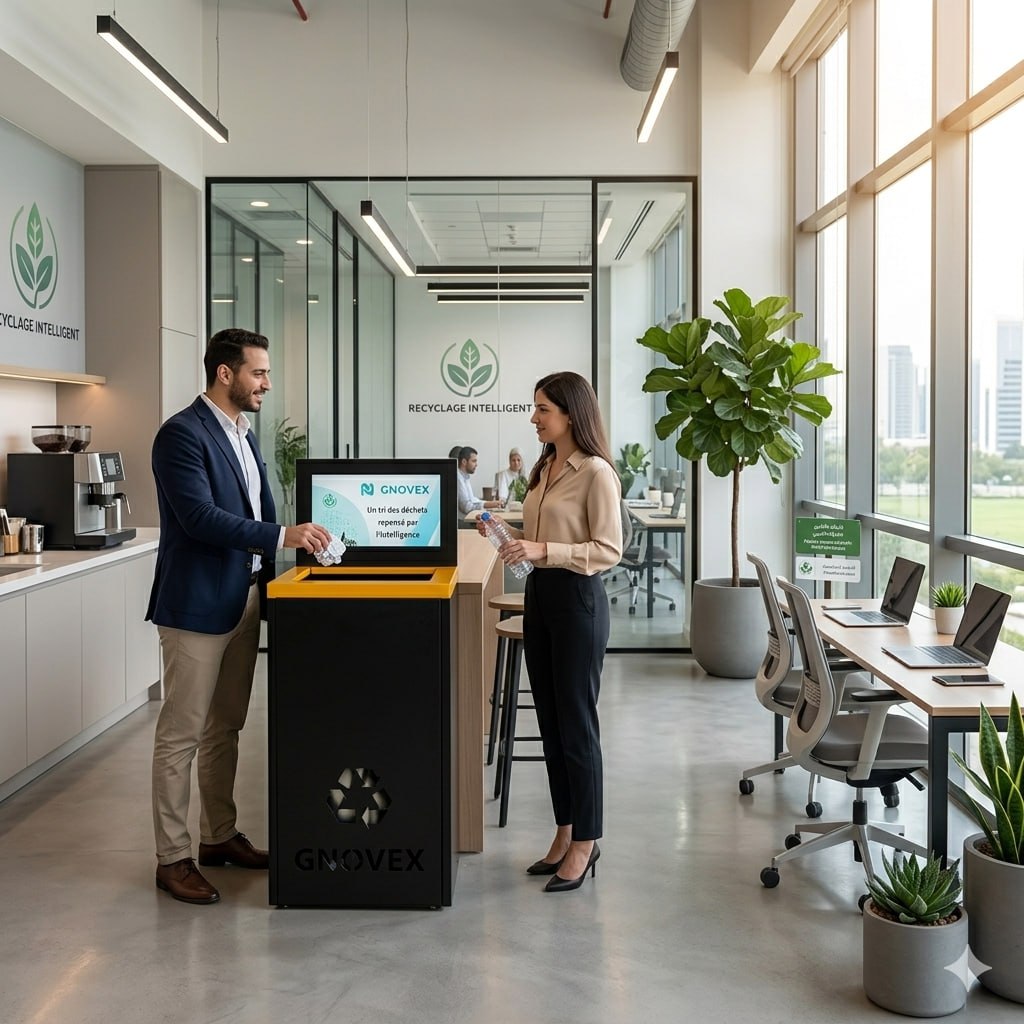
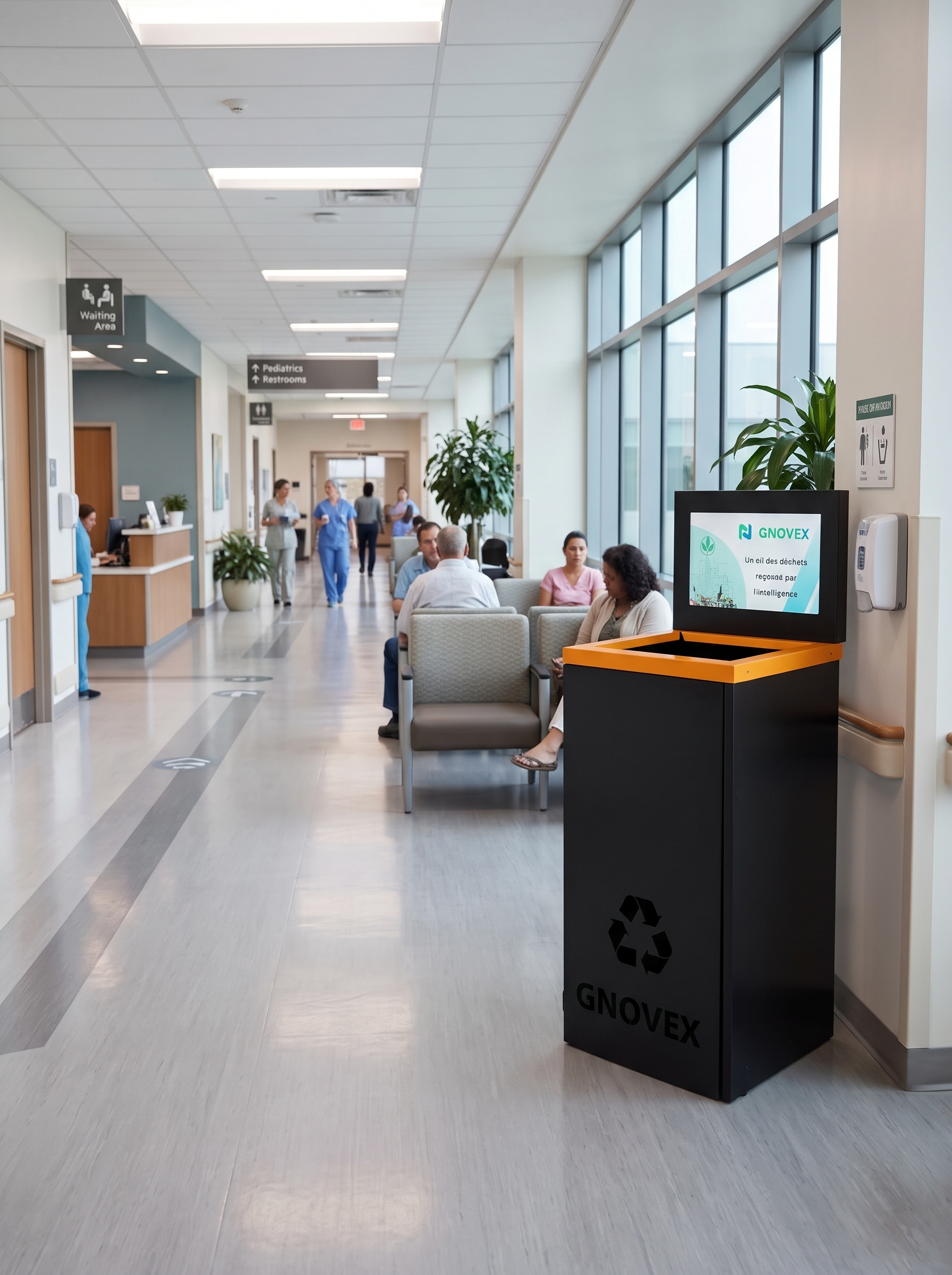
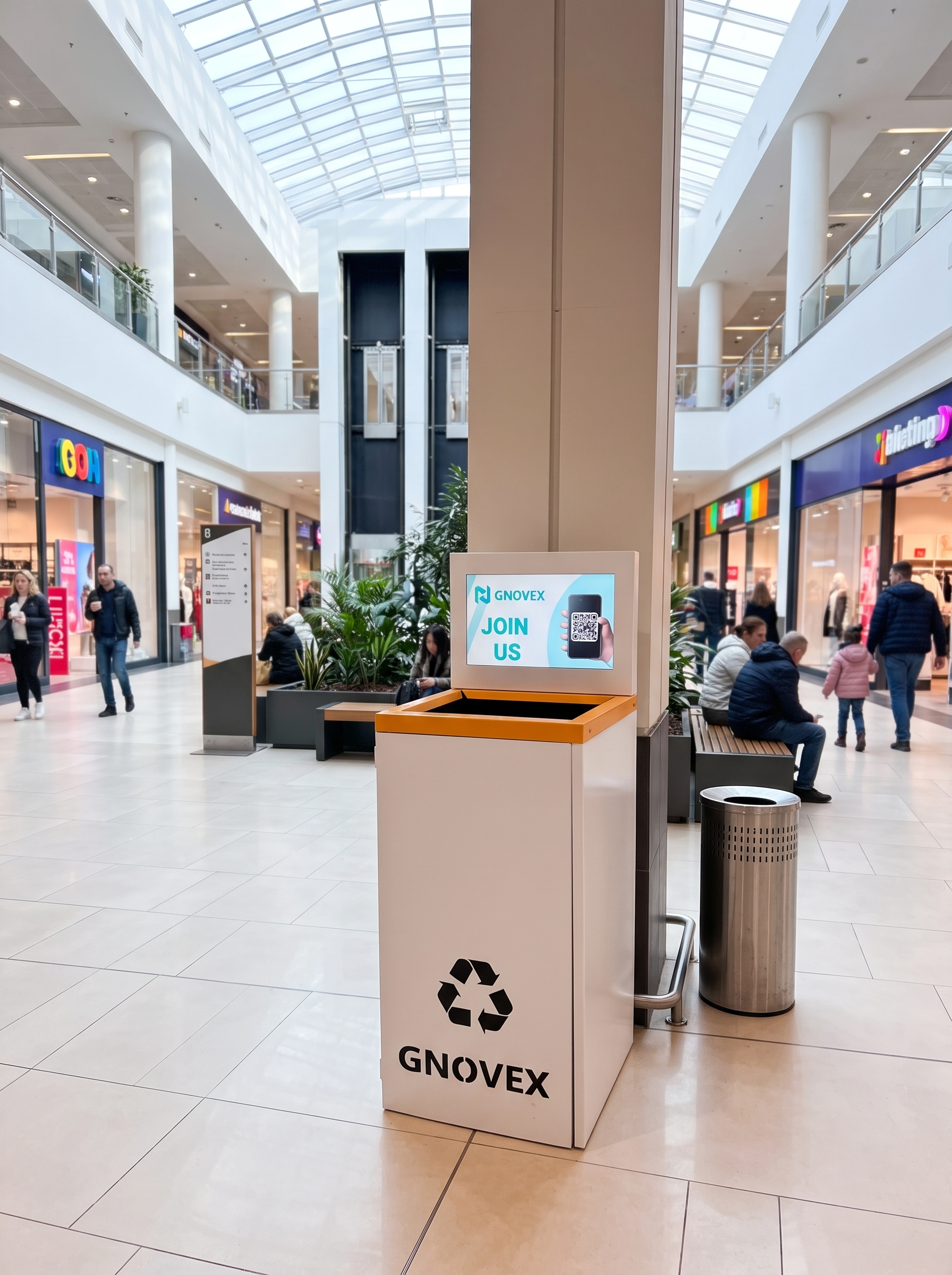
Connected manual sorting combines the simplicity of human sorting with the power of IoT connectivity. Your teams sort each flow themselves, guided by clear signage, while a connected module measures fill levels, usage and frequency — turning every bin into a source of reliable data for your reports.
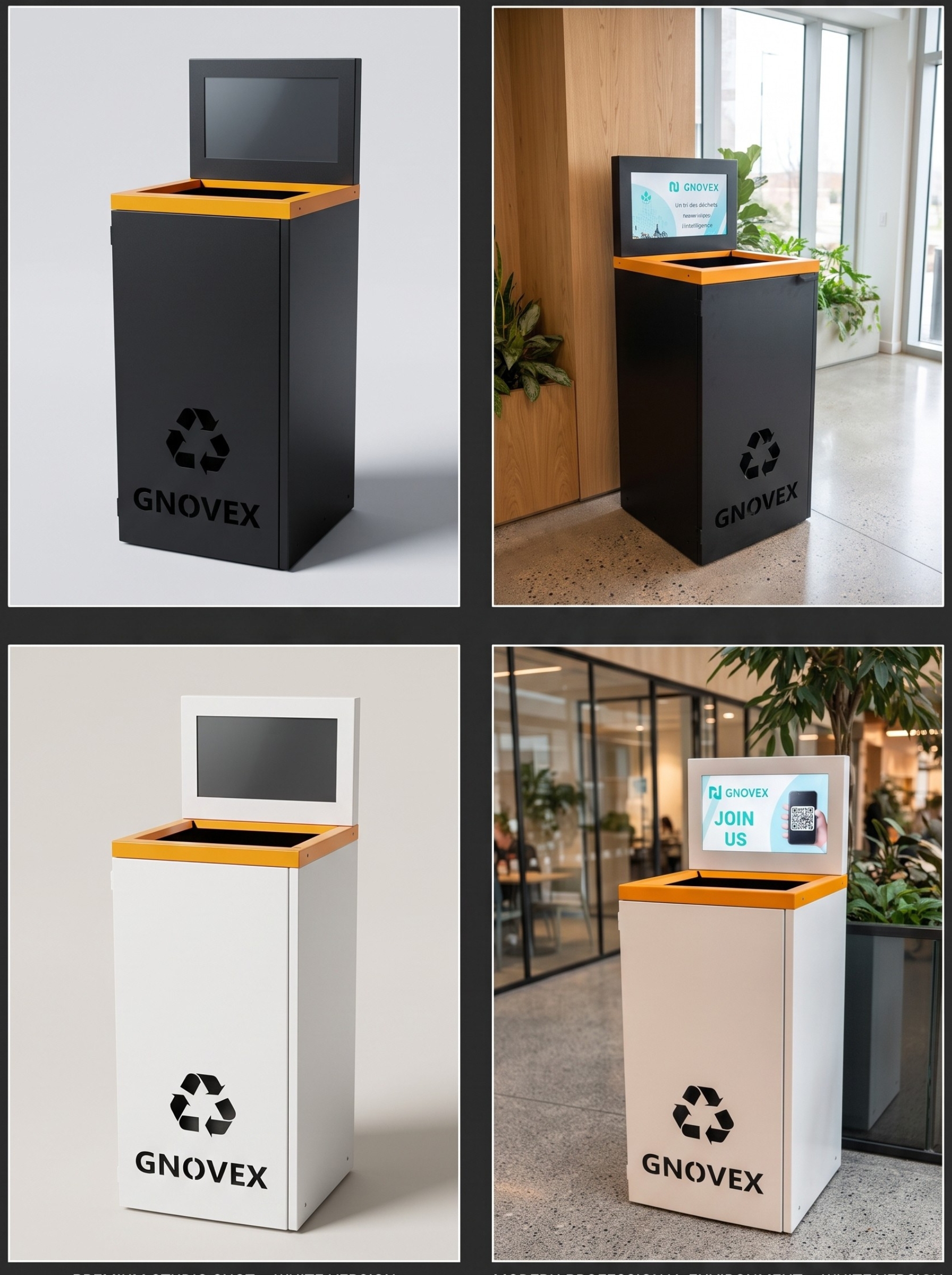
A robust, connected solution designed to integrate into any professional environment — from offices to industrial sites.
Without sensors, collection teams don't know which bins are full and which are empty — leading to unnecessary trips or, worse, overflowing bins.
Manual sorting that isn't measured can't be proven. Without usage data, it's difficult to document your efforts for CSR reports and environmental evaluations.
Without real usage frequency data, collection schedules are set by habit rather than by actual need — a source of avoidable inefficiency.
Your teams already sort manually and effectively. Without a connected layer, this effort stays isolated instead of feeding your broader performance monitoring.
Your teams keep sorting manually. The connected module measures, reports and traces everything, automatically.
Your teams sort each item into the right compartment, guided by clear visual signage on every bin.
The IoT module measures fill level and usage frequency in real time, without interfering with the sorting gesture.
Data is transmitted via WiFi / 4G to your dashboard — no manual entry, no missed readings.
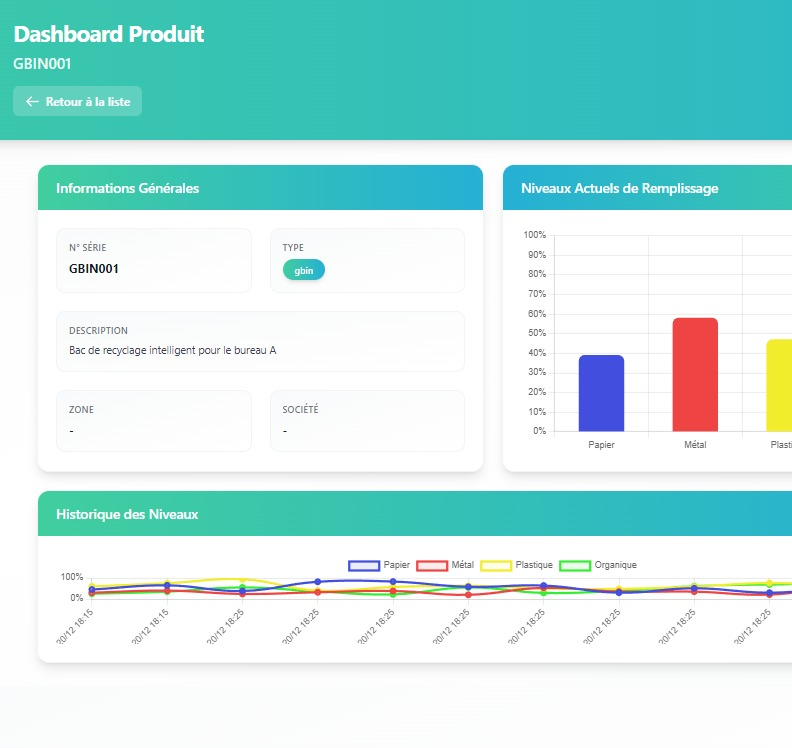
Every reading is logged and available in your dashboard, ready to feed your performance tracking and reports.
Each connected bin reports its fill level and usage to a central dashboard — turning a simple manual gesture into data your organization can act on.
Connected Manual Sorting keeps the simplicity of human sorting while giving you the data you need to manage it.
Your sorting process stays unchanged for your teams — the connectivity layer works in the background, with no added workload.
Plan pickups based on real fill-level data instead of a fixed schedule.
Usage and volume data generated automatically, ready to be shared with your partners and evaluators.
Every bin's activity is logged, archived and exportable for your audits and CSR reports.
Show a concrete, measurable commitment to the circular economy without a full automation investment.
Environmental requirements for organizations keep evolving. Starting with connected manual sorting lets you build real usage data and digital habits before scaling to more automated solutions.
Connected tracking data feeds your CSR reports from day one, with measurable and dated indicators.
All your bin activity data is timestamped, archived and exportable — ready whenever an external evaluation requires it.
The connected layer you deploy today is the foundation your organization can build on as its sorting needs evolve.
Connected Manual Sorting adapts to environments where human sorting is preferred, with the data layer added on top.
Keep your teams' familiar sorting habits while gaining visibility on bin usage and collection needs.
Equip public sorting points with connectivity to plan collection rounds based on actual needs.
Stations, malls and venues can rely on connected alerts before a bin overflows, without dedicated monitoring staff.
Track manually sorted flows across multiple zones and feed the data into your ERP or EHS reporting tools.
Keep the simplicity your teams know, and gain the visibility your organization needs.